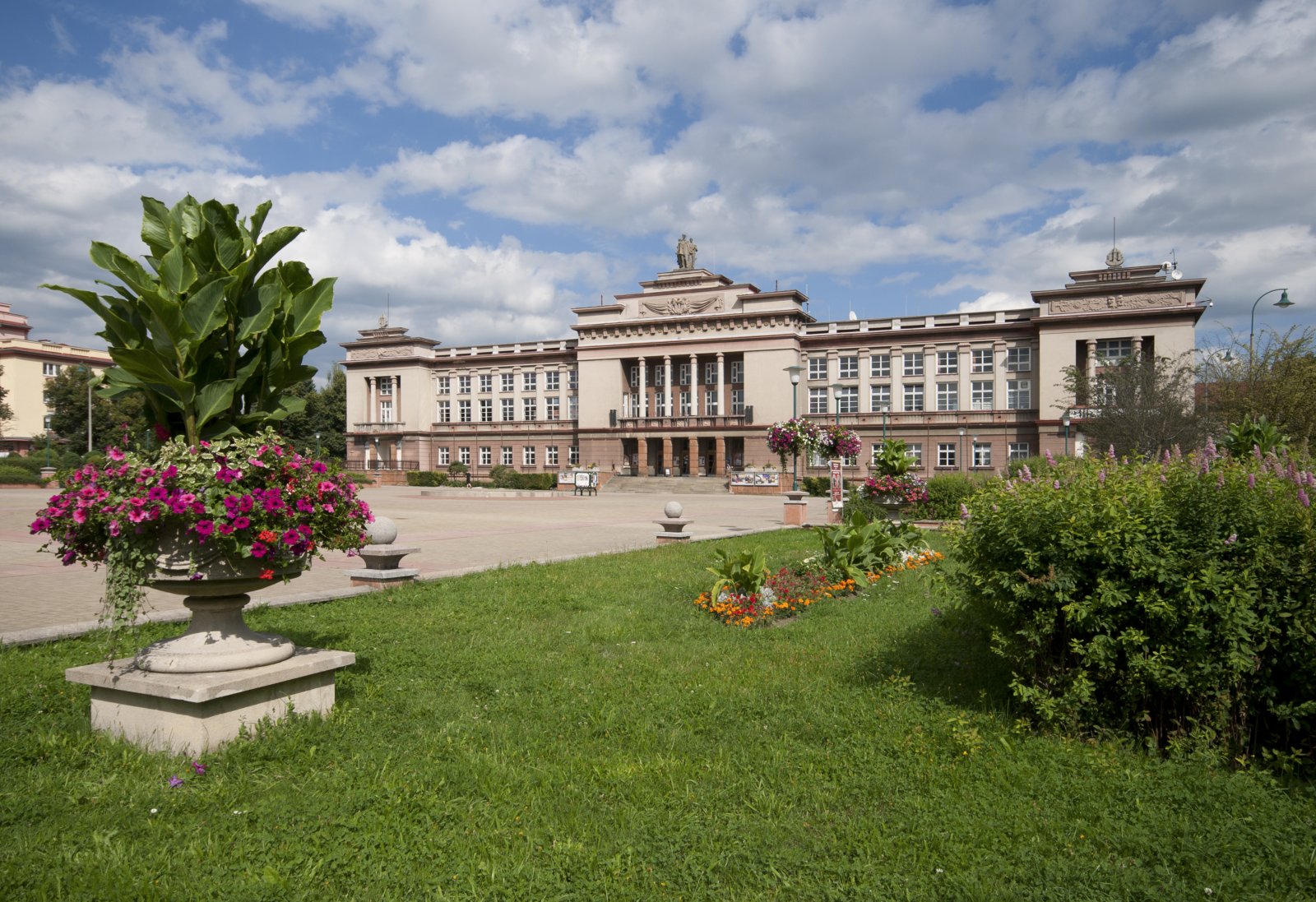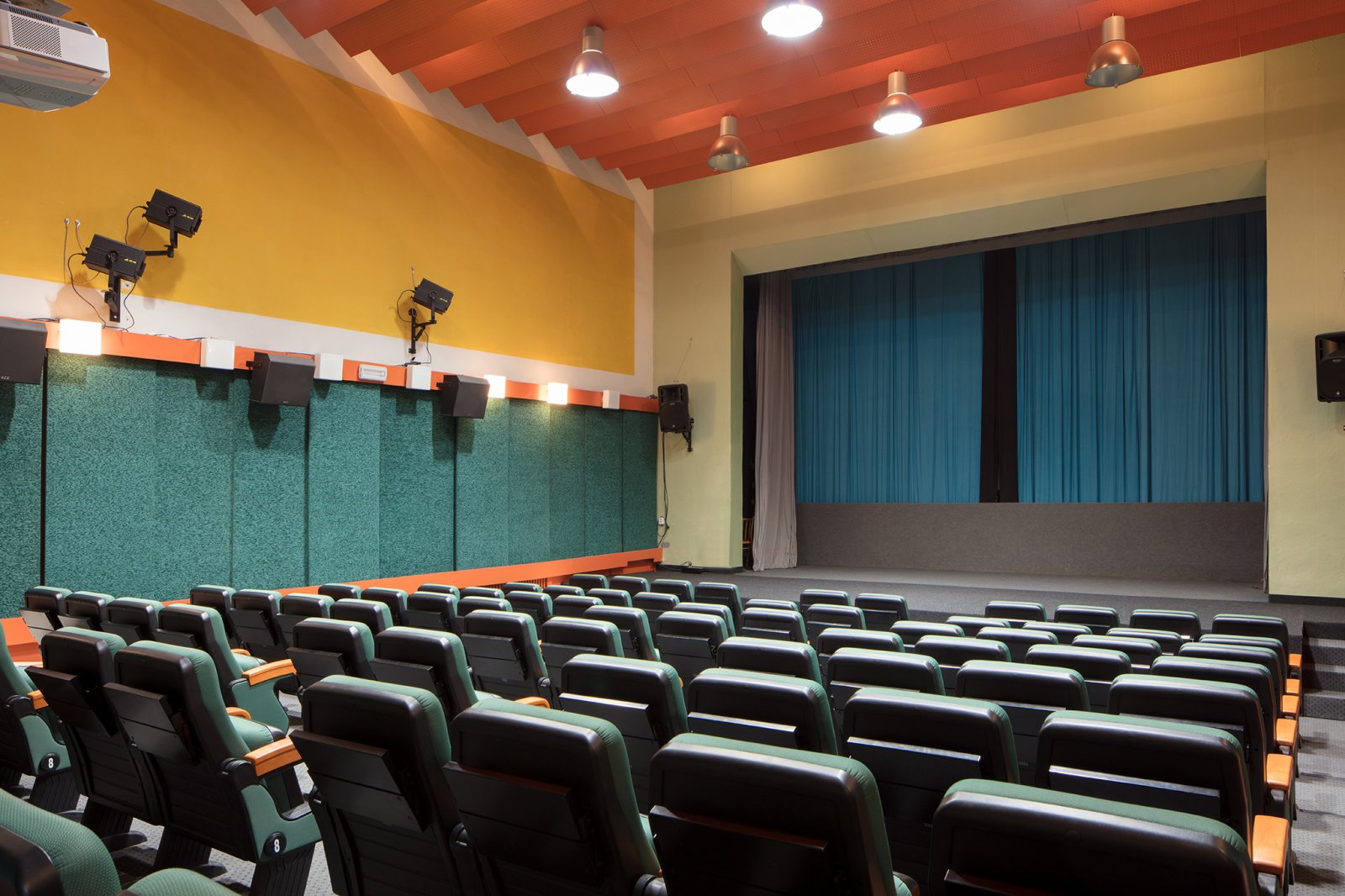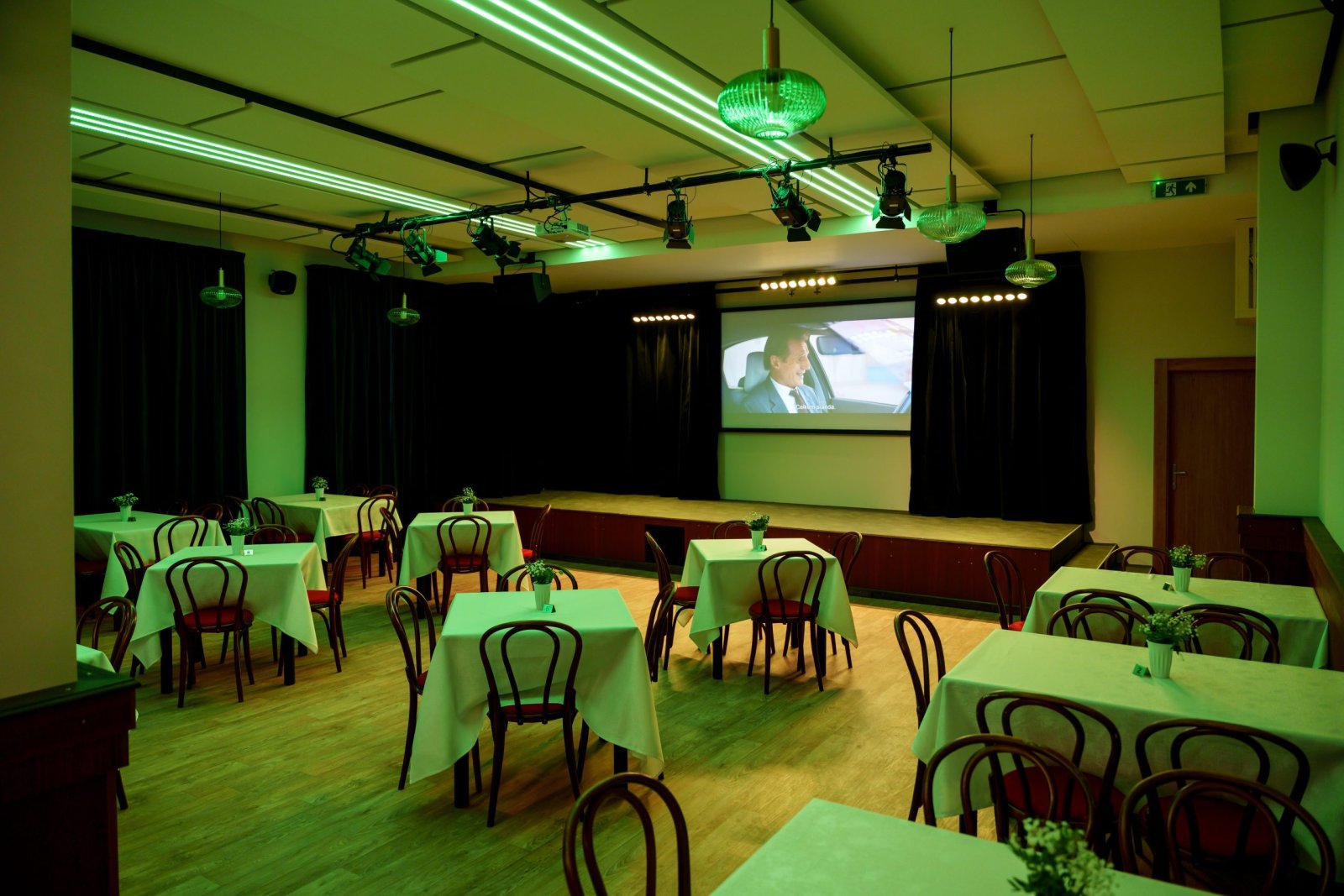
The Ostrov House of Culture offers several venues of different sizes for conferences, training sessions, presentations, corporate meetings and social or cultural events.
Theatre Auditorium
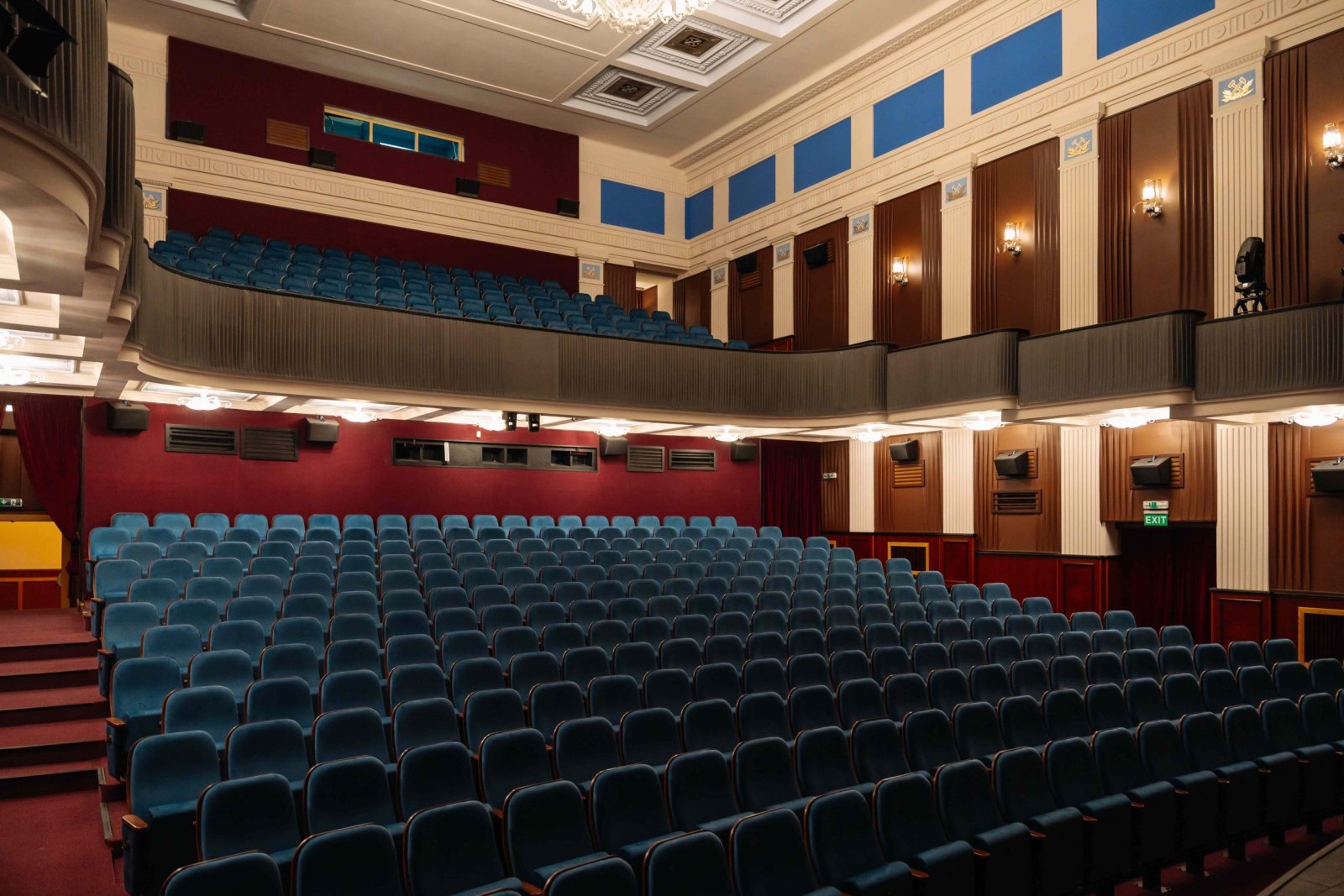
A traditional proscenium theatre with a stage, stalls, balcony and boxes. The auditorium features a cinema screen, sound and lighting equipment and full blackout facilities. It is suitable for conferences, concerts, theatre and film performances or competition programmes. Capacity is 391 people plus two wheelchair spaces.
Ballroom
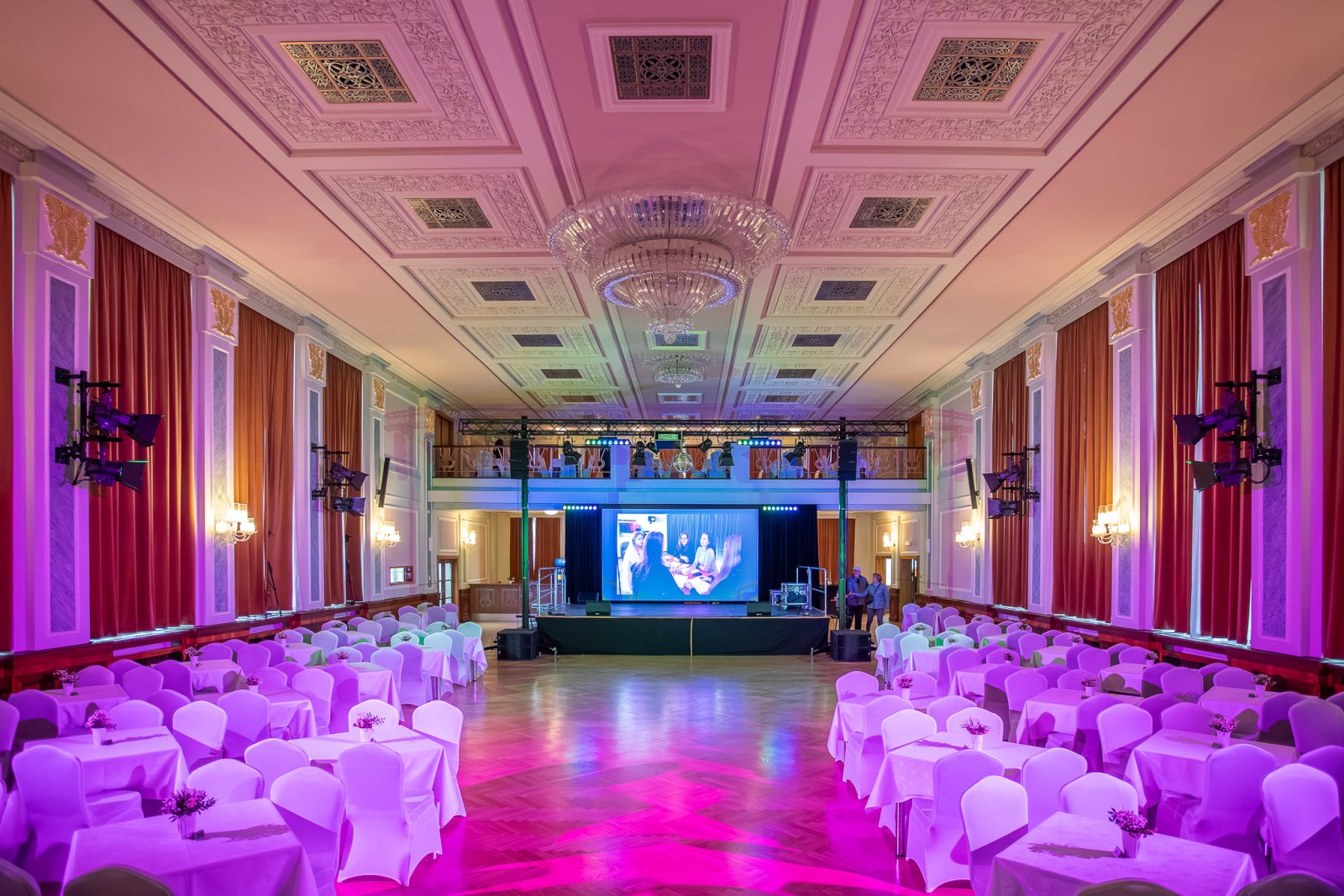
A large-capacity venue suitable for conferences, balls, corporate parties and other social or cultural events. Capacity is 300 people.
Ballroom Foyer
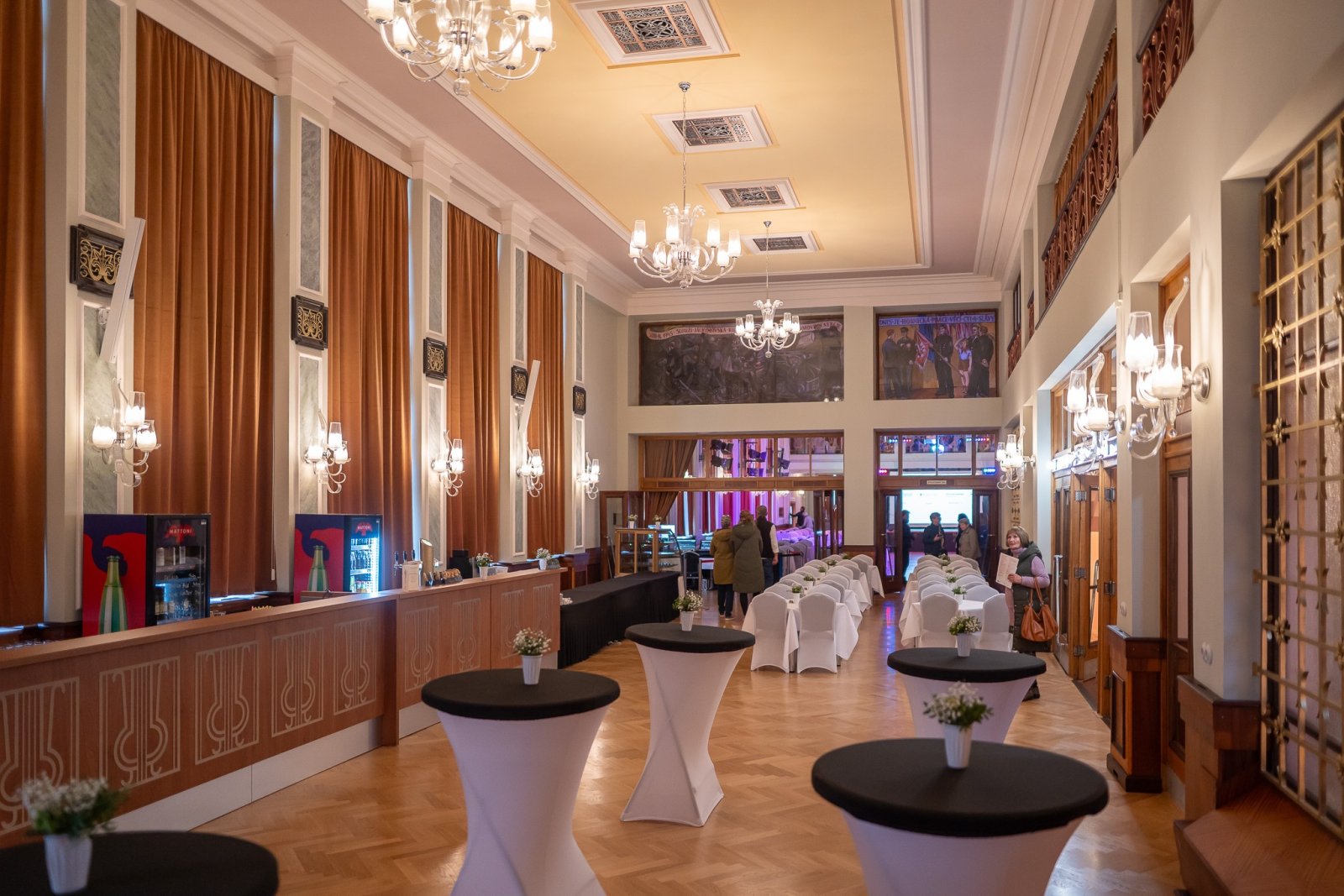
The foyer can be used together with the ballroom or as a separate venue. It is suitable for presentations, participant registration, exhibitions, sales events and smaller gatherings. Capacity is 100 people.
Kinokavárna
A screening room suitable for lectures, conferences, training sessions, film screenings and smaller theatre performances. It offers full blackout facilities, basic sound and lighting equipment, a separate entrance and its own sanitary facilities. The adjoining small dance hall and lobby can also be used as part of the event. Capacity is 78 people.
T-klub
A modern multifunctional club suitable for lectures, screenings, concerts, theatre performances and smaller social events. The venue provides high-quality sound and lighting equipment, blackout facilities, a cloakroom, sanitary facilities and separate rear access. Capacity depends on the type and layout of the event.
Theatre Dressing Room
An enclosed space that can serve as event support facilities, a club room or a venue for small meetings and rehearsals. Capacity is 20 people.
Club Room 114
An intimate ground-floor room suitable for private gatherings, training sessions and smaller business meetings. Capacity is 15 people.
The accompanying programme may include the audiovisual installation SORELA: A Story of the Town and Its Memory, located on the balcony above the ballroom foyer. The projection presents Ostrov’s post-war transformation into a model town of socialist architecture and the role of the House of Culture in its history.